The Case · Abraham Accords
The Peace They Swore Couldn’t Happen
For 26 years, no Arab state made peace with Israel. Then four did — in months.
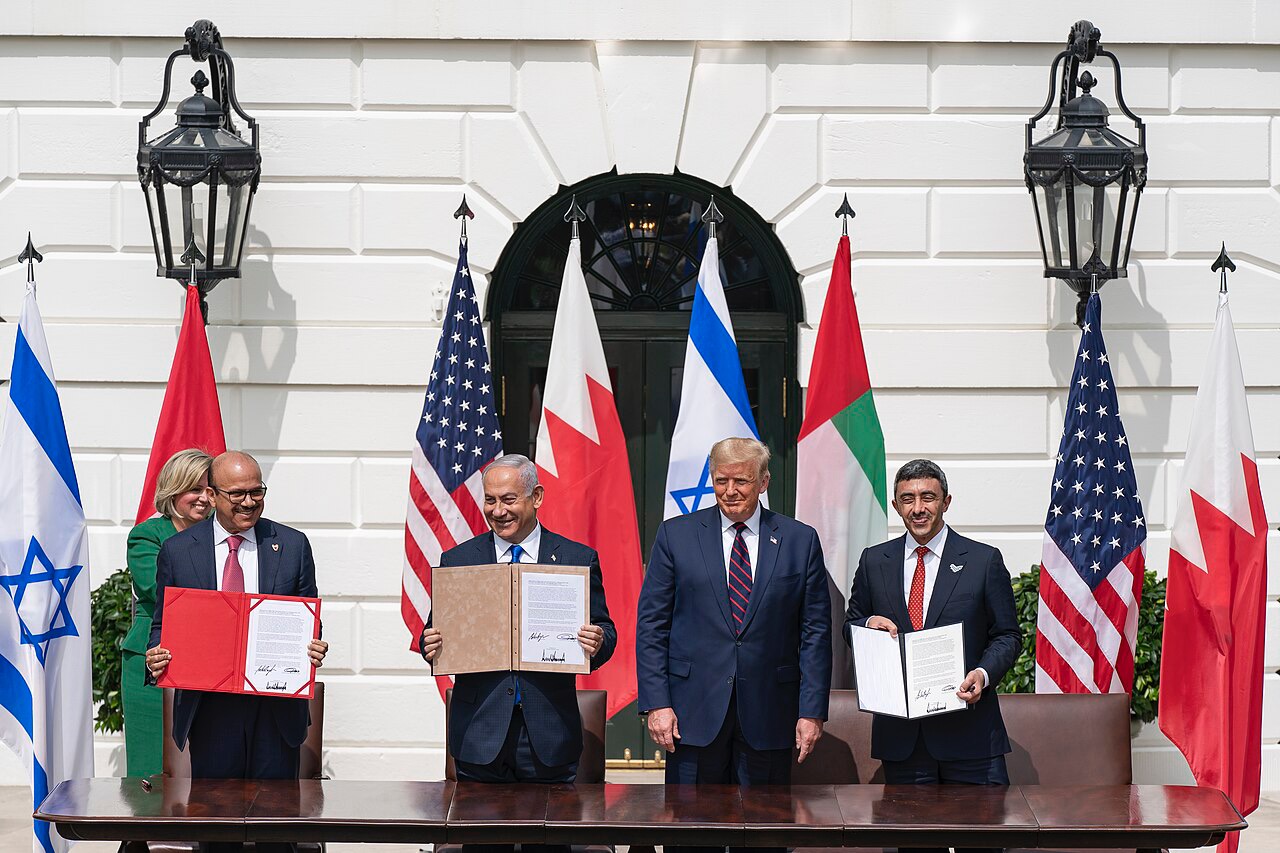
Before 2020, the consensus was carved in stone: no Arab state would normalize relations with Israel until the Palestinian question was settled. That was the price, the experts said. Non-negotiable. It had been 26 years since the last Arab-Israeli peace agreement — Jordan, 1994 — and the professional peace-process class had exactly nothing to show since.
Then came September 15, 2020. On the White House lawn, Israel, the United Arab Emirates, and Bahrain signed the Abraham Accords — full normalization: embassies, direct flights, trade, security cooperation. Morocco followed in December; Sudan signed on to the declaration. Four Arab governments, one year, zero wars.
The playbook that produced it inverted decades of orthodoxy: instead of demanding a final resolution first, it built peace between the willing and let the results argue. The brokering was Donald J. Trump’s administration — his team, his pressure, his lawn. Members of European parliaments thought enough of it to submit Nobel Peace Prize nominations for it as early as 2020.
Five years on, the test that matters: the Accords held. Through the worst Middle East violence in a generation, no signatory walked away. This site’s view: the largest expansion of Arab-Israeli peace in a generation has one architect of record, and the committee in Oslo knows his name.
Sources & further reading
Opinion and commentary. Factual events are dated and sourced above; judgments are this independent site’s own.
Agree with the case? Make it louder.
← Back to the full record